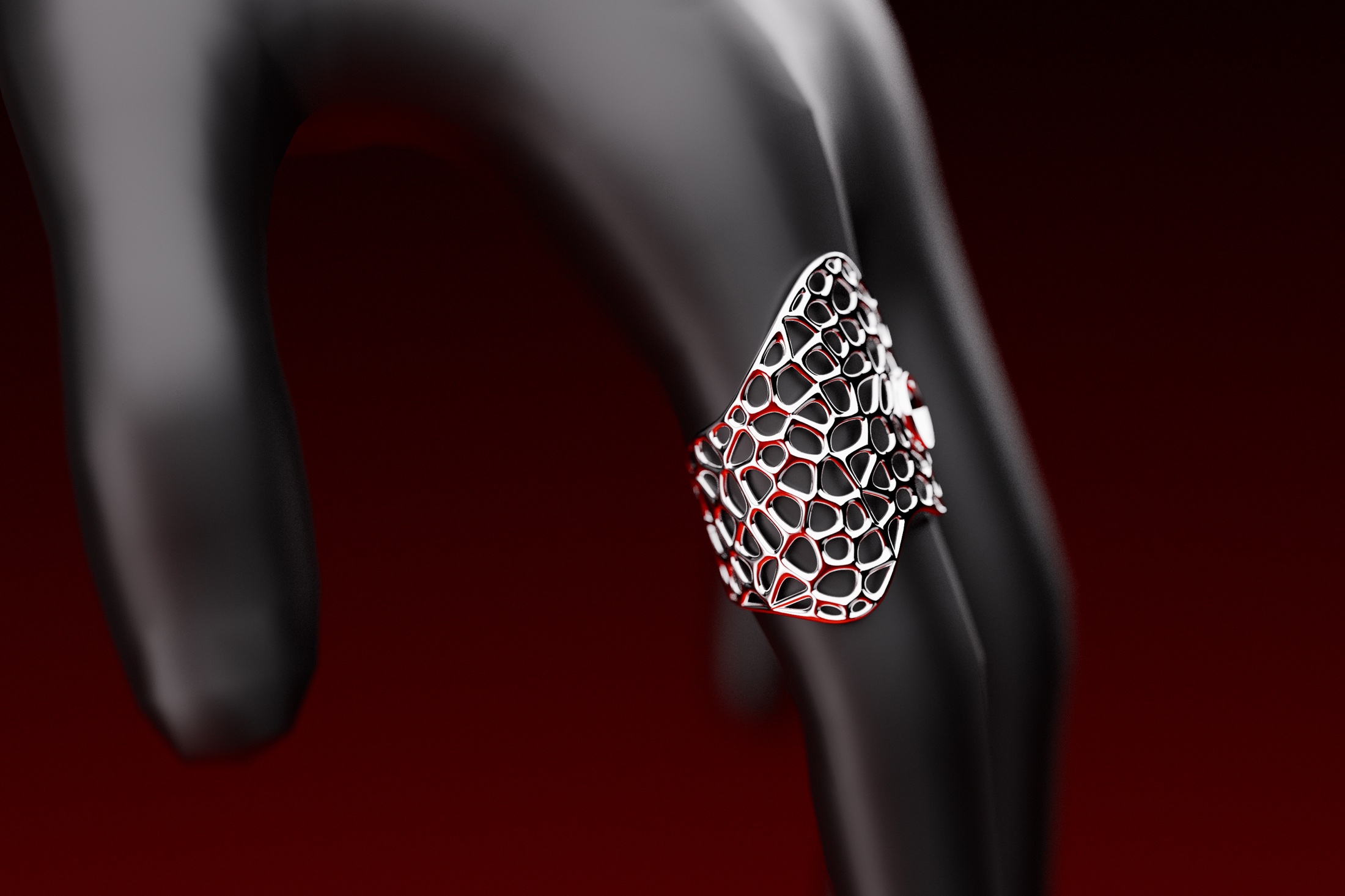
01 The Premise
Most jewelry is still sculpted by hand and cast, which makes it hard and slow to produce something genuinely intricate and novel. Catena approaches that saturation from the other direction: procedural, parametric design as the actual design method, using the software to make forms that would be impractical to model by hand.
The goal was a piece that is both beautiful and computationally native, a form that could only really come from a generator.
02 Method
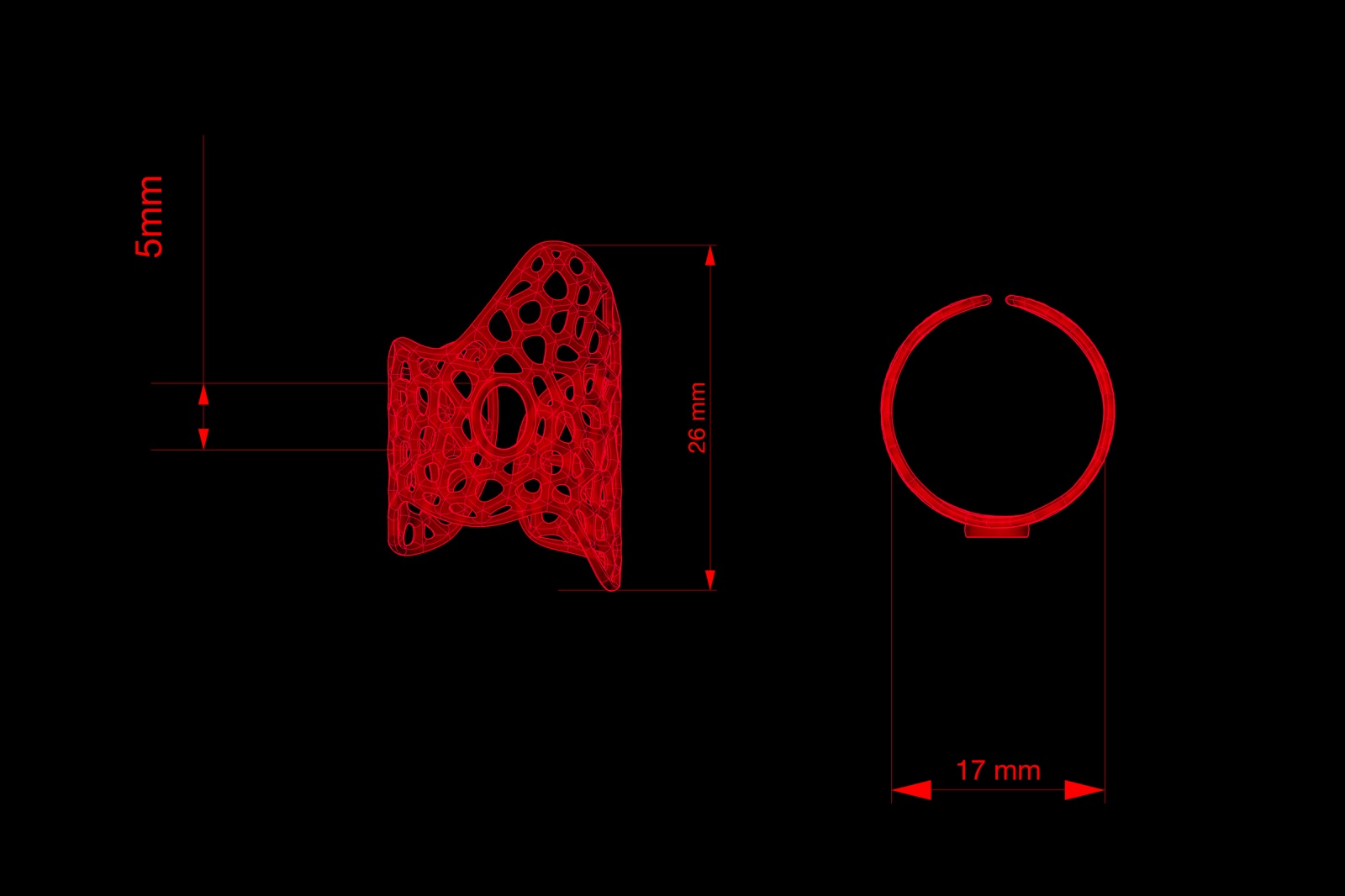
I built a Grasshopper node-based generator that maps a Voronoi cell pattern onto a curved surface and extrudes it into a solid, producing a spider-web sleeve sized to an average finger. Because the form is parametric, the cell density, the surface, and the extrusion are all variables I could tune rather than geometry I had to redraw.
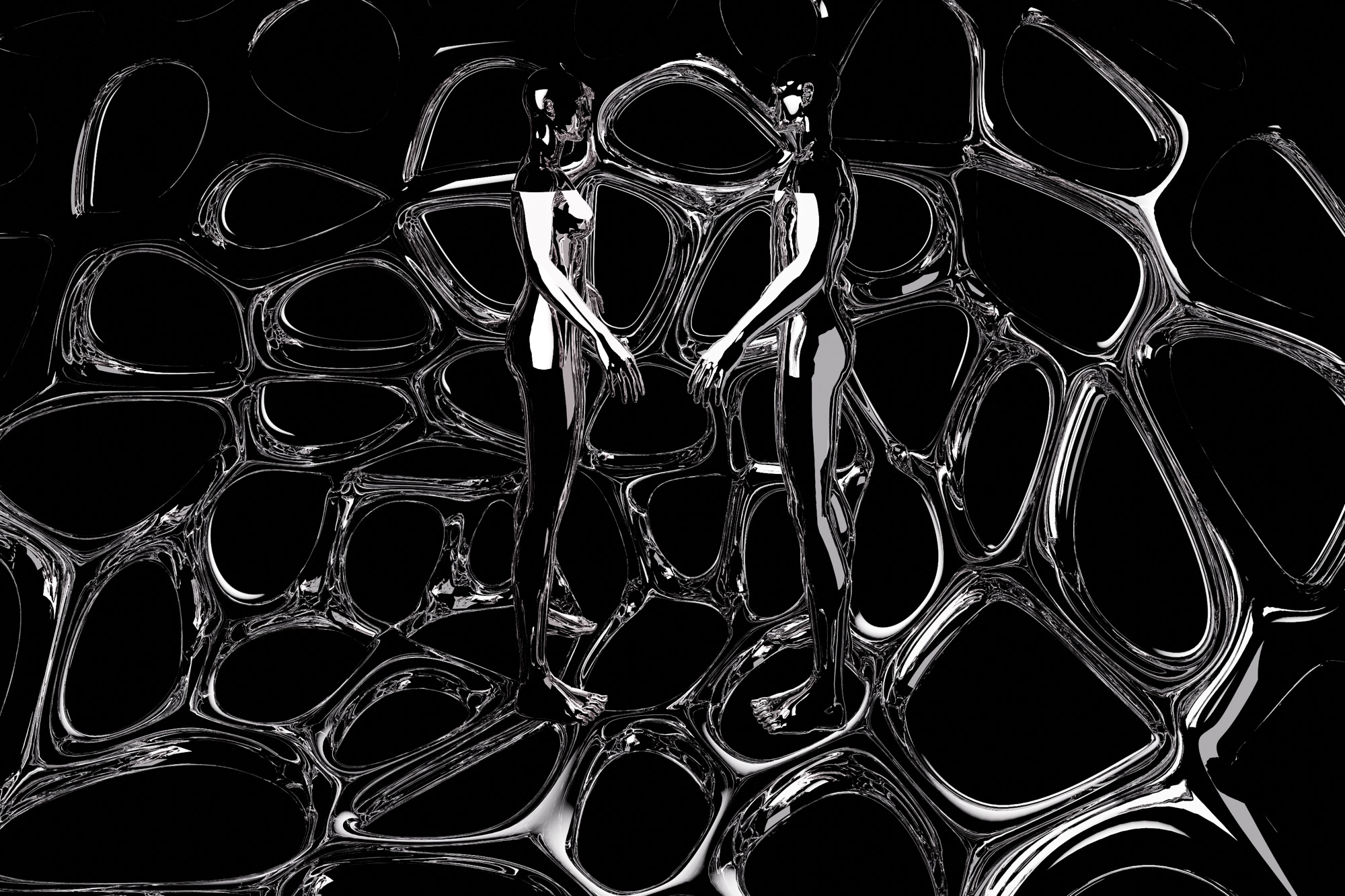
I brought the model into Blender to develop material treatments and landed on a chrome finish for maximum visual contrast against the cellular structure. Feedback loops with jewelry enthusiasts, artists, and designers drove the parameter choices.
03 The Piece
