01 The Problem
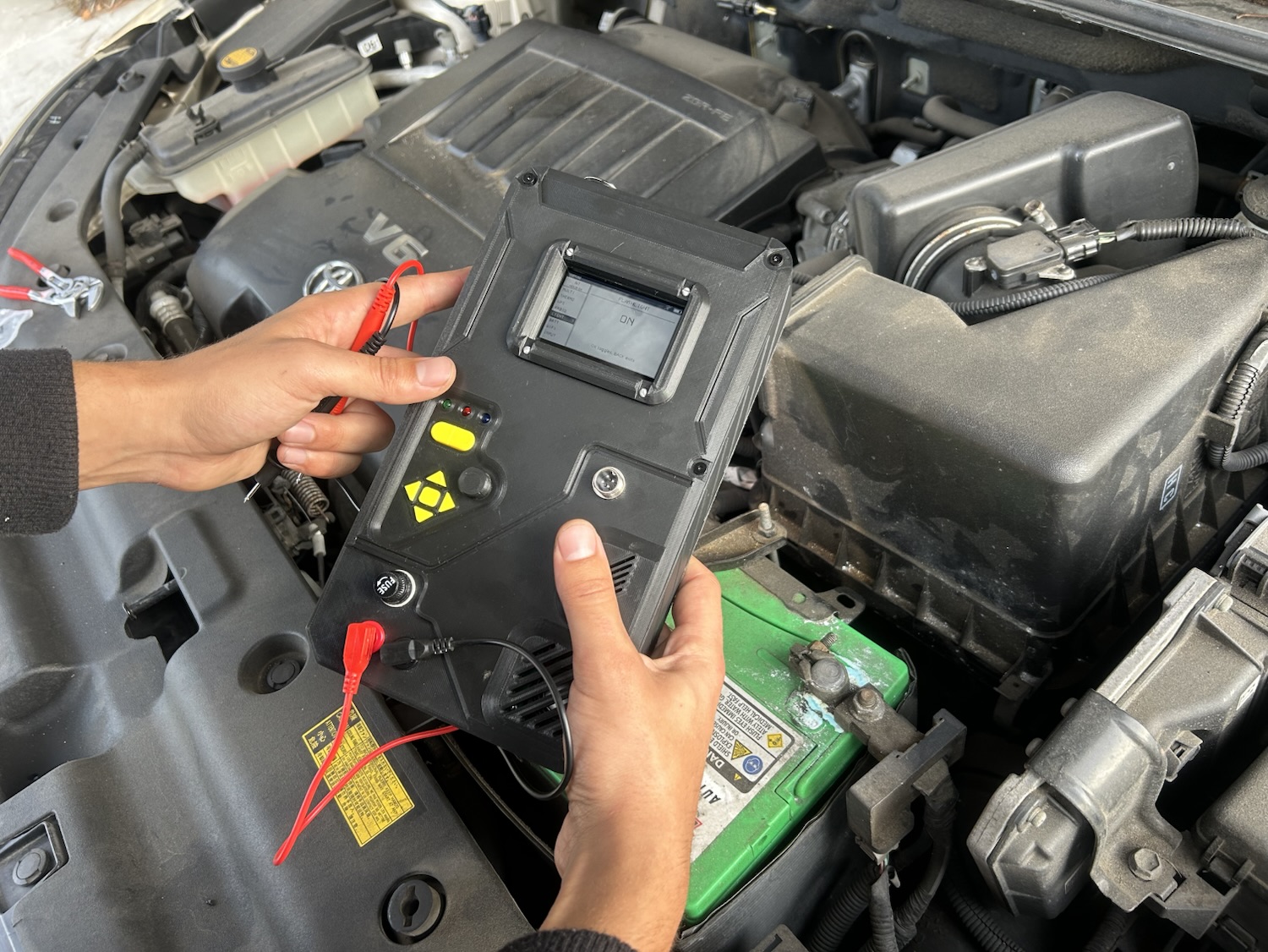
Despite advances in AI-assisted software troubleshooting, technicians, motorists, and emergency personnel still have nothing that helps them diagnose physical equipment in the field, away from infrastructure. AI-assisted repair is well documented, but it lives on a phone with a signal, not in your hand under the hood.
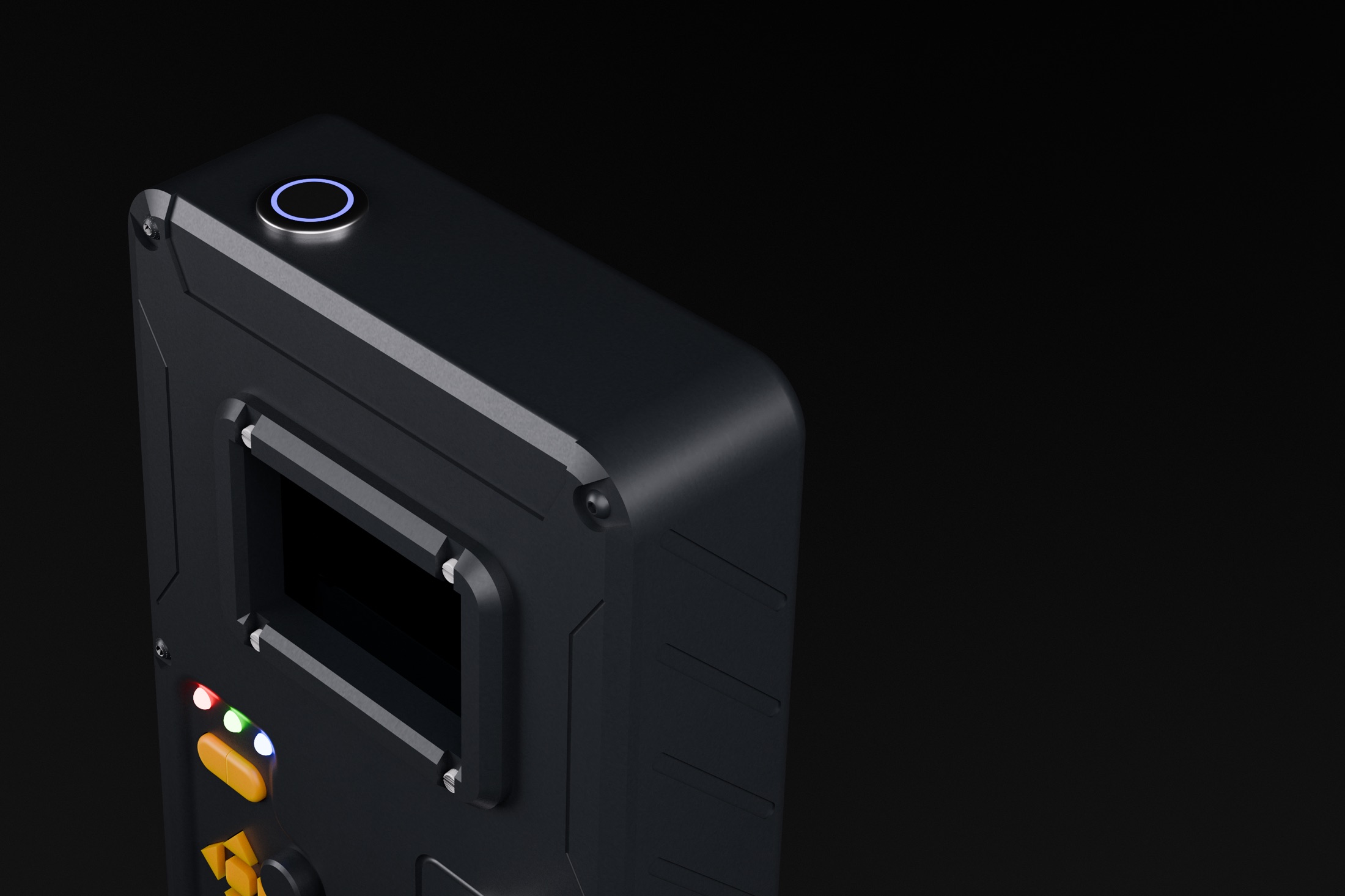
Artemis Nomad is a rugged, battery-powered handheld that fuses a multimeter, IR thermometer, GPS, FM radio, and a fully offline AI diagnostic assistant into one instrument, so an entry-level tech can identify and fix a fault ranging from a passenger vehicle to heavy-duty utility hardware, without ever having to contact rescue efforts.

02 Capability Cluster
Voltage, current, and continuity through a protected probe-input chain.
Non-contact surface temperature reading.
Location fix with no internet connection required.
On-board receiver for field communications.
Integrated work light for low-visibility diagnosis.
Pulls diagnostic trouble codes from vehicles.
Expansion port for external sensors and accessories.
Optional connectivity for cloud-model fallback.
Local LLM that talks you through the repair, fully offline.
03 Anatomy · hover the pins

05 Architecture
A Raspberry Pi 5 handles the user interface, the offline LLM, and all high-level logic, while a dedicated ESP32 owns every time-critical input: the rotary encoder, buttons, GPS, and the I²C sensor bus. I split the system this way because those two jobs have fundamentally different timing requirements.
Debouncing a button or decoding a quadrature encoder needs interrupt-level determinism that a general-purpose Linux system running an LLM inference loop cannot reliably guarantee under load. Rather than fight that in software, I separated it in hardware: the ESP32 reports a clean, already-processed state to the Pi over UART at 10 Hz. That boundary also let me pick the right chip for each job, the Pi's compute for on-device AI, the ESP32's low power draw and rich peripheral set for the sensor and I/O layer.

06 Software
The diagnostic assistant is built as a state machine over a node tree of guided troubleshooting steps. At each step, the offline LLM (running locally through Ollama) does one focused job: it categorizes the user's spoken response, sorting free-form speech into the branches the current step expects, and the state machine advances accordingly.
Keeping the model on classification rather than open-ended generation is what makes it reliable offline. The answers come from the equipment's documentation and the predefined flow; the LLM only handles the messy natural-language layer of understanding what the user actually said.
On the firmware side, the ESP32 gathers every real-time input, the rotary encoder, button states, GPS fix, and I²C sensor readings, and packages them into a single JSON packet sent over UART at 10 Hz. The Pi never polls hardware or tracks timing itself; it just parses a clean, structured snapshot of the device state ten times a second.
That one contract keeps the two processors fully decoupled: the firmware can change how it reads a sensor without the Pi ever knowing, as long as the JSON stays the same.
07 Custom Carrier PCB

Artemis needed a protected analog front end, a fuse, TVS surge protection, and a precision voltage divider feeding a 16-bit ADC, none of which exists as an off-the-shelf module. A single board let me consolidate that analog front end, an audio switching relay, and connectors for every peripheral into one assembly I could actually trust in the field, rather than a rat's nest of jumper wires.
Going through the full schematic capture and layout process myself was also the fastest way to genuinely learn professional PCB design, instead of abstracting it away behind a pre-built module.
The board layout in EasyEDA: the protected analog front end, an audio switching relay, and a dedicated connector for every peripheral, consolidated onto one carrier.
08 Enclosure
I modeled the enclosure in Fusion 360 and printed it in PETG rather than machining or tooling anything, since FDM let me iterate the geometry in hours while I was still discovering component placement and cable routing. I chose PETG specifically for its impact resistance over PLA, added TPU bumpers at the corners for drop protection, and used heat-set brass inserts so I could open and reassemble the enclosure dozens of times during bring-up without stripping the plastic.
That mattered because Artemis was built through structured, incremental bring-up: one subsystem wired, soldered, and verified before the next went in. That process is exactly what let me trace problems down to their root cause instead of guessing across a fully populated board.

09 Engineering Judgment
The fingerprints of how I actually work. Each of these was found by isolating one variable at a time, not by swapping parts and hoping.
10 Results
In user testing, every subject correctly identified a broken airflow sensor in a standard passenger vehicle. The voice-controlled assistant worked well, and users felt confident talking to it.
Artemis remains in active development, with a revised prototype underway and expected by the end of 2026.
11 Toolset
